Dvorák - Piano Trios
The Florestan Trio
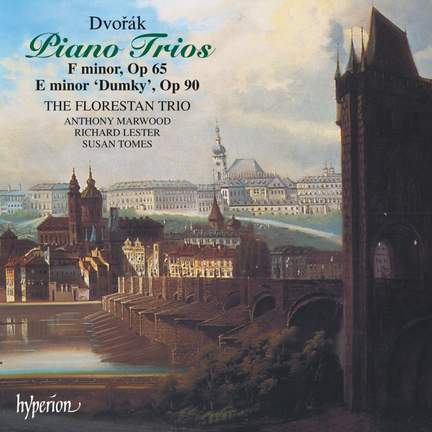
A favourite and appropriate pairing – Dvorák's most passionate chamber work in harness with one of his most genial. The F minor Piano Trio (1883) was contemporaneous with the death of Dvorák's...
Dvorák - Piano Trios
The Florestan Trio
Purchase product
A favourite and appropriate pairing – Dvorák's most passionate chamber work in harness with one of his most genial. The F minor Piano Trio (1883) was contemporaneous with the death of Dvorák's...
About
This CD introduces to disc the newly formed Florestan Trio comprising Susan Tomes, Anthony Marwood and Richard Lester, all now-familiar and highly respected artists after their many earlier recordings, both as members of other ensembles and as soloists. Miss Tomes and Mr Lester were, of course, members of the now-disbanded piano quartet Domus (which was joined by Mr Marwood in its last, award-winning recording of the two Faur Piano Quintets on CDA66766). The Florestan Trio takes its name from Schumann's name for himself in positive and carefree mood. (His name for his introspective self was Eusebius.) The music is among Dvo?k's most celebrated his two most popular, but very different, piano trios. The dark and disturbing F minor is followed by the folk-inflected 'Dumky' of unconventional form and sunny disposition (a sequence of alternating slow-fast-slow-fast sections).
Contents and tracklist
Awards and reviews
 2010
2010
A favourite and appropriate pairing – Dvorák's most passionate chamber work in harness with one of his most genial. The F minor Piano Trio (1883) was contemporaneous with the death of Dvorák's mother; it anticipates something of the storm and stress that characterises the great D minor Seventh Symphony (1884-5) and the Florestan Trio serves it well. All three players allow themselves plenty of expressive leeway and yet the musical line is neither distorted nor stretched too far. The second movement Allegretto is truly grazioso and the qualifying menomosso perfectly judged. The finale is buoyant rather than especially rustic, whereas the more overtly colourful Dumky Trio inspires a sense of play and a vivid suggestion of local colour.
Throughout the performance, the manifest 'song and dance' elements of the score (heartfelt melodies alternating with folk-style faster music) are keenly projected. The recordings are first rate, as are the insert-notes. If you're after a subtle, musically perceptive coupling of these two works, then you could hardly do better.