Constant Lambert - Ballets
English Northern Philharmonia, David Lloyd-Jones
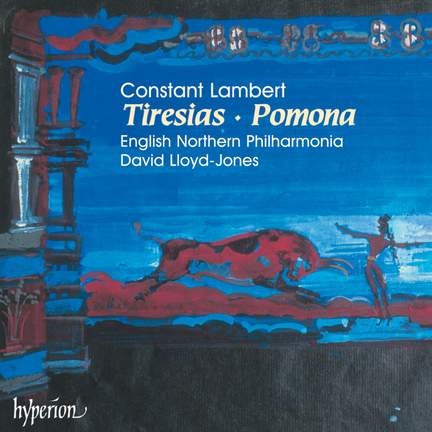
Constant Lambert's Tiresias was commissioned for the Festival of Britain in 1951 and the subject had been preoccupying the composer for over 20 years. In the event, the ailing Lambert struggled...
Constant Lambert - Ballets
English Northern Philharmonia, David Lloyd-Jones
Purchase product
Constant Lambert's Tiresias was commissioned for the Festival of Britain in 1951 and the subject had been preoccupying the composer for over 20 years. In the event, the ailing Lambert struggled...
About
Constant Lambertlike his colleague Peter Warlocktends to be remembered more for his personal charisma and tragically early death than for his music. Yet the twenty or so extended scores which he did compose (The Rio Grande and Summer's Last Will and Testament being perhaps the most well known) are every bit as worthy as those of his more famous contemporaries. The bulk of Lambert's output was directed at the ballet, and he was the first Englishman ever to be commissioned by Diaghilev and the Ballets Russes quite an achievement for a twenty-year-old. As a result of this, Nijinska commissioned Pomona, a ballet rich in the atmosphere of neoclassicism and the French dance music of the 1920s. Pomona shares with Tiresias a thread of sexual intrigue, indeed the stage requirements of the latter suggest it as a particularly improbable ballet subject: the lead changing sex, two snakes copulating, an argument about which of the sexes enjoys the sexual act the most The work enjoyed considerable success during the early 1950s, but then fell from the repertory. This is its first recording, and uses the reconstructed score commissioned by the BBC in 1995.
Contents and tracklist
- Michael Cleaver (piano)
- English Northern Philharmonia
- David Lloyd-Jones
Spotlight on this release
-
An error occurred.
Try watching this video on www.youtube.com, or enable JavaScript if it is disabled in your browser.
Awards and reviews
 2010
2010
Constant Lambert's Tiresias was commissioned for the Festival of Britain in 1951 and the subject had been preoccupying the composer for over 20 years. In the event, the ailing Lambert struggled to meet his July deadline and called upon colleagues like Robert Irving, Alan Rawsthorne, Elisabeth Lutyens, Gordon Jacob, Denis Apivor, Humphrey Searle and Christian Darnton to help him finish the orchestration. Lambert directed eight performances in all, but the work was coolly received and he died the following month, just two days before his 46th birthday.
The instrumentation of Tiresias calls for neither violins nor violas and features a notably varied battery of percussion as well as an important role for piano obbligato (brilliantly played here by Michael Cleaver). The music has a dark-hued intimacy and at times starkly ritualistic demeanour which probably baffled that glitzy first-night audience. However, Lambert's achievement is ripe for reassessment, and David Lloyd-Jones's meticulously prepared realisation allows us to revel anew in the score's many effective set-pieces.
Stravinsky and Ravel are prime influences, but the work is suffused with that distinctive mix of keen brilliance and bleak melancholy so characteristic of its creator. The present account is all one could wish for.
Pomona (1927) is much earlier and altogether lighter in tone. Deftly scored for a chamber orchestra of 34 instrumentalists, Pomona comprises eight delightfully inventive numbers whose neo-classical spirit breathes very much the same air as that of Stravinsky and Les Six from the same period. Again, the performance is first-rate and the sound quite admirable.