Special offer. Haydn - The Cello Concertos
Gautier Capuçon (cello)
Mahler Chamber Orchestra, Daniel Harding
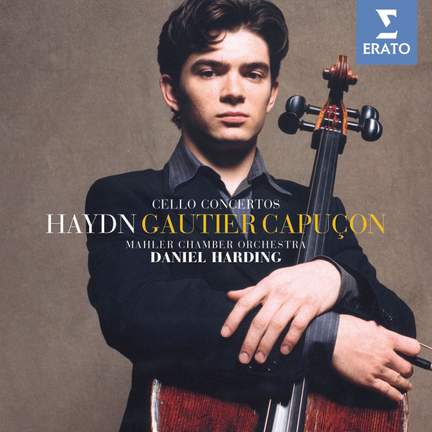
Still in his early twenties, Gautier Capuçon plays the cello with the control and wisdom of a much older musician. The lightness of his touch and the consistent clarity of his bow strokes are...
Special offer. Haydn - The Cello Concertos
Gautier Capuçon (cello)
Mahler Chamber Orchestra, Daniel Harding
Purchase product
Still in his early twenties, Gautier Capuçon plays the cello with the control and wisdom of a much older musician. The lightness of his touch and the consistent clarity of his bow strokes are...
About
Contents and tracklist
- Gautier Capuçon (cello)
- Mahler Chamber Orchestra
- Daniel Harding
- Recorded: 2002-06-03
- Recording Venue: 30th May - 3rd June 2002. Jugendstiltheater, Vienna, Austria.
Work length23:43
This work is only available as an album download.
- Gautier Capuçon (cello)
- Daniel Harding, Mahler Chamber Orchestra
- Recorded: 2002-06-03
- Recording Venue: 30th May - 3rd June 2002. Jugendstiltheater, Vienna, Austria.
2 (Op. 101): I. Allegro moderato - Cadenza
Track length13:51
This track is only available as an album download.
- Gautier Capuçon (cello), Mahler Chamber Orchestra
- Daniel Harding
- Recorded: 2002-06-03
- Recording Venue: 30th May - 3rd June 2002. Jugendstiltheater, Vienna, Austria.
Awards and reviews
 2010
2010
Still in his early twenties, Gautier Capuçon plays the cello with the control and wisdom of a much older musician. The lightness of his touch and the consistent clarity of his bow strokes are quite admirable in themselves, but when combined with an uncanny sweetness of tone in the higher registers they're breathtaking.
These qualities suit the two Haydn concertos very well indeed and bestow upon the modest little anonymous D major Concerto unexpected dignity and charm.
Daniel Harding, conducting the Mahler Chamber Orchestra, opts for galant rather than driven tempi. The scale of his orchestral forces enables him to establish a relationship with the soloist more akin to chamber music than is usually heard in these works. There's lightness of articulation throughout, conveying both intimacy and vitality.
Their reading of the C major Concerto, while not strongly imprinted, is truly Classical in its delicacy and refinement. It's shapely and spirited but never forced. It's the second item, the D major Haydn, which proves the highlight. In the opening movement Capuçon conjures the darting image of a water sprite, who can nevertheless steal time in all the right moments. The doublestops are dizzying and the chords in the poetic cadenza are exquisitely rolled. The Adagio takes on the aura of a meditation; Capuçon seems detached while gently supported by the orchestra, in a reverie of his own. When it comes, the elaboration that serves in the place of a cadenza is perfectly attuned to the moment.
The final Allegro is never allowed to go 'peasant', remaining instead in the aristocrat's drawing room where it sparkles and glows.