Special offer. Messiaen: Vingt Regards sur l'enfant Jésus
Pierre-Laurent Aimard (piano)
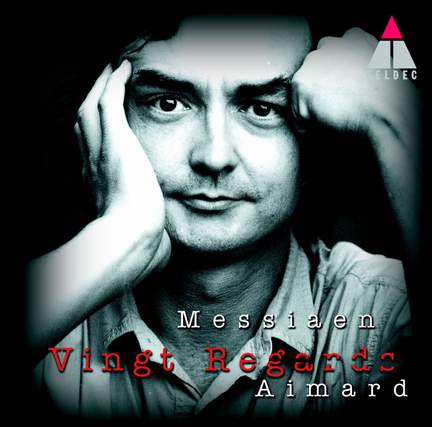
Any review of the Vingt regards should begin by discussing how well the pianist conveys the cycle's visionary awe and builds its disparate sections into a true cycle. But here the virtuosity...
Special offer. Messiaen: Vingt Regards sur l'enfant Jésus
Pierre-Laurent Aimard (piano)
Purchase product
Any review of the Vingt regards should begin by discussing how well the pianist conveys the cycle's visionary awe and builds its disparate sections into a true cycle. But here the virtuosity...
About
Contents and tracklist
Excerpt,Messiaen:
Vingt Regards sur l'enfant Jésus
Work length27:46
This work is only available as an album download.
VI Par Lui tout a été fait
Track length10:56
This track is only available as an album download.
Excerpt,Messiaen:
Vingt Regards sur l'enfant Jésus
Work length1:04:35
This work is only available as an album download.
XV Le baiser de l'Enfant-Jésus
Track length10:04
This track is only available as an album download.
XIX Je dors, mais mon coeur veille
Track length10:08
This track is only available as an album download.
XX Regard de l'Église d'amour
Track length11:58
This track is only available as an album download.
Awards and reviews
 2010
2010
Any review of the Vingt regards should begin by discussing how well the pianist conveys the cycle's visionary awe and builds its disparate sections into a true cycle. But here the virtuosity is so remarkable that even listeners with a profound distaste for Messiaen – for whom the 15th Regard ('The kiss of the infant Jesus') is a by-word for sentimental religiosity – may listen openmouthed.
Sheer virtuosity is an important part of the cycle's language: one of the functions of Regard No 6 ('By Him all was made') is to astonish, and the power and excitement of Aimard's playing are indeed astonishing. Virtuosity is also desirable if Messiaen's demands for a huge palette of colour and orchestral or super-orchestral sonorities are to be met. In No 14 ('The gaze of the angels') his notes evoke 'powerful blasts of immense trombones'; Aimard's prodigious range of timbre and dynamic provide just the sound that Messiaen must have imagined. The penultimate Regard makes a more extreme demand: that in the hushed coda the player should recall a passage from the Fioretti of St Francis where 'the angel drew his bow across the string and produced a note so sweet that if he had continued I should have died of joy'. Here the effect is suggested not by virtuosity but intense concentration, stillness and purity of colour. Could it have been a little slower? Possibly; Aimard's timing is faster than most and a few of his silences could have been held longer but his dazzling technique and fabulous range of colour make this the most spectacular reading of the Vingt regards yet.