Giordano, U: Andrea Chénier
Plácido Domingo, Renata Scotto, Sherrill Milnes, Jean Kraft, Maria Ewing, Allan Monk, Enzo Dara
National Philharmonic Orchestra, The John Alldis Choir, James Levine
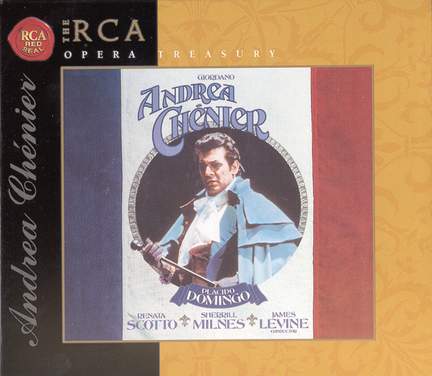
Choosing between this recording and the Decca Chailly (currently available only as a download), it might seem sensible to start with the tenor in the title-role, and here a strong inclination...
Giordano, U: Andrea Chénier
Plácido Domingo, Renata Scotto, Sherrill Milnes, Jean Kraft, Maria Ewing, Allan Monk, Enzo Dara
National Philharmonic Orchestra, The John Alldis Choir, James Levine
Purchase product
Choosing between this recording and the Decca Chailly (currently available only as a download), it might seem sensible to start with the tenor in the title-role, and here a strong inclination...
About
Contents and tracklist
- Nigel Beavan (bass baritone), National Philharmonic Orchestra, Sherrill Milnes (baritone), Renata Scotto (soprano), Jean Kraft (mezzo-soprano), Maria Ewing (mezzo-soprano), Terence Sharpe (bass), Piero de Palma (tenor), John Alldis Choir, John Alldis (chorus master), Plácido Domingo (tenor), Michel Sénéchal (tenor), Enzo Dara (baritone), Allan Monk (baritone), Gwendolyn Killebrew (mezzo-soprano), David Brand (soprano), Stuart Harling (bass), Malcolm King (bass), Isser Bushkin (bass)
- James Levine
Awards and reviews
 2010
2010
Choosing between this recording and the Decca Chailly (currently available only as a download), it might seem sensible to start with the tenor in the title-role, and here a strong inclination would be to plump for RCA and Domingo: he's in splendid voice, with a touch of nobility to his manner that makes for a convincing portrayal of a poet. Pavarotti (Chailly) begins with a rather leather-lunged Improvviso, but he later finds poetry in the role as well, especially when responding to his soprano, Caballé, who's rather stretched by the more exhausting reaches of her role and sounds audibly grateful for the occasional opportunities he gives her to float rather than belt a high-lying phrase. However, Pavarotti is an Italian tenor, and his Italianate sense of line adds one per cent or so of elegance to some phrases that even Domingo can't match. Caballé does many things beautifully, and her fine-spun pianissimos and subtle shadings only occasionally sound mannered, but the role is undeniably half a size too big for her. So it's for Scotto, you might say, and a hint of strain is audible once or twice, in her timbre rather than her phrasing.
It's her phrasing that tips the balance back to RCA: Scotto is as subtle a vocalist as Caballé, but she gives meaning and eloquence to every phrase without ever breaking the long line, which one can't always say of the Spanish soprano. Matters are about even as far as the baritones are concerned: Milnes acts admirably, but refrains from over-acting, and the voice is rich and characterful. In the supporting cast, but RCA's striking Bersi, vividly characterised Incredible, and their Roucher, too, aren't outmatched (only their Madelon, both fruity and acid – a grapefruit of a voice – is disappointing).
A lot of people will enjoy the huge energy and bustle of Levine's direction. It's vividly characterful, but a shade exhausting and overassertive.
The flow of the music seems more natural in Chailly's hands, and orchestral detail is clearer.
The Decca recording, too, is warmer.