Special offer. Haydn - Great Masses
Monteverdi Choir & English Baroque Soloists, John Eliot Gardiner
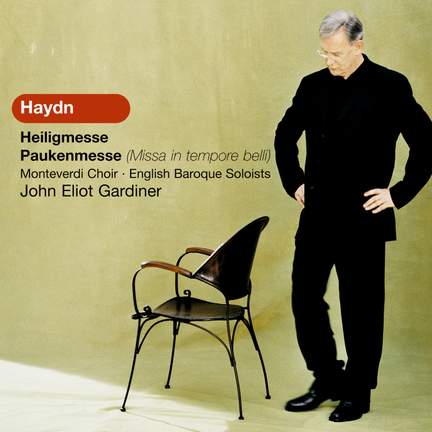
This rounds off Gardiner's excellent series of the six late Masses, all supreme masterpieces, which Haydn wrote for the nameday each year of the Princess Esterhazy. There's also room for a valuable...
Special offer. Haydn - Great Masses
Monteverdi Choir & English Baroque Soloists, John Eliot Gardiner
Purchase product
This rounds off Gardiner's excellent series of the six late Masses, all supreme masterpieces, which Haydn wrote for the nameday each year of the Princess Esterhazy. There's also room for a valuable...
About
Contents and tracklist
- Joanne Lunn (soprano), Sara Mingardo (contralto), Topi Lehtipuu (tenor), Brindley Sherratt (bass), Angharad Gruffydd Jones (soprano), Elinor Carter (contralto), Julian Clarkson (bass)
- Monteverdi Choir, English Baroque Soloists
- Sir John Eliot Gardiner
- Recorded: 2001-11-20
- Recording Venue: The Colosseum, Watford
- Joanne Lunn (soprano), Sara Mingardo (contralto), Topi Lehtipuu (tenor), Brindley Sherratt (bass)
- Monteverdi Choir, English Baroque Soloists
- Sir John Eliot Gardiner
- Recorded: 2001-11-20
- Recording Venue: The Colosseum, Watford
- Monteverdi Choir, English Baroque Soloists
- Sir John Eliot Gardiner
- Recorded: 2001-11-20
- Recording Venue: The Colosseum, Watford
Awards and reviews
 2010
2010
This rounds off Gardiner's excellent series of the six late Masses, all supreme masterpieces, which Haydn wrote for the nameday each year of the Princess Esterhazy. There's also room for a valuable extra in the motet Insanae et vanaecurae. Haydn salvaged it from his Italian oratorio Il ritorno di Tobia, after he had pruned it, saying that it was 'too good to waste'. With a Latin text replacing the original Italian, it inspires Gardiner and his brilliant team to a searing performance, very different from those you'd get from a cathedral choir.
The Masses also find Gardiner on incisive form. The contrast with Hickox's Chandos cycle is most striking in the Gloria of the Heiligmesse.
Where Hickox makes the music swagger happily, Gardiner directs a biting, crisp reading, with spotlit drums and trumpets and marginally less spring in the rhythm. Contrasts elsewhere are similar, if less marked; Hickox is warmer and more joyful where Gardiner, with some extreme speeds is consistently crisp and fresh.
Both Masses were written in 1796 and the Heiligmesse first performed on the Princess's nameday that year. The Paukenmesse was held over until 1797, though it had been heard in Vienna the previous December. Not only are both Masses smaller in scale than the succeeding four, the Paukenmesse at least is more lyrical, less grandly symphonic that those masterpieces.
Haydn is still intent on springing surprises; he characteristically ends each with vigorous, even military settings of the 'Dona nobis pacem' which foreshadow Beethoven' illustration of war in the Missa solemnis.
The recording is clear and well balanced, highlighting the pinpoint ensemble of Gardiner's choir and his excellent team of soloists.