Naïve & Sentimental Music
Los Angeles Philharmonic Orchestra, Esa-Pekka Salonen
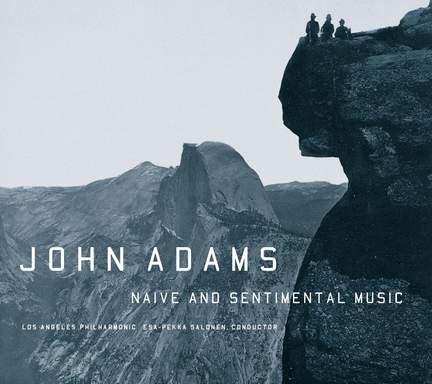
The title is adapted from On Naïve and SentimentalPoetry, a 1795 essay by Schiller, who regarded the naïve artist as one for whom art is a natural form of expression, and who creates without...
Naïve & Sentimental Music
Los Angeles Philharmonic Orchestra, Esa-Pekka Salonen
Purchase product
The title is adapted from On Naïve and SentimentalPoetry, a 1795 essay by Schiller, who regarded the naïve artist as one for whom art is a natural form of expression, and who creates without...
About
Contents and tracklist
Work length44:18
This work is only available as an album download.
- John Adams
I. Naive and Sentimental Music
Track length18:10
This track is only available as an album download.
II. Mother of the Man
Track length15:09
This track is only available as an album download.
III. Chain to the Rhythm
Track length10:59
This track is only available as an album download.
Awards and reviews
 2010
2010
The title is adapted from On Naïve and SentimentalPoetry, a 1795 essay by Schiller, who regarded the naïve artist as one for whom art is a natural form of expression, and who creates without concern for historical significance; the sentimental artist is all too aware that he and his art stand apart, and what he creates reflects this chasm. 'This particular piece,' Adams writes, 'perhaps more than any of my others, attempts to allow the naïve in me to speak, to let it play freely.' A symphony in all but name, Naïve andSentimental Music (1999) is cast in three movements.
The first is an 'essay on melody,' built around an expansive theme that unfolds in long strands. Adams' harmonic sensitivity and structural control are breathtaking. And the entire movement unfolds as organically as the melody that's its idée fixe. Adams titled the finale 'Chain to the Rhythm'. Melody takes a back seat to what quickly becomes a dazzling and increasingly ominous moto perpetuo. Naïve and SentimentalMusic is dedicated to Esa-Pekka Salonen and the Los Angeles Philharmonic, who premièred it in February 1999. Though the fiendishly difficult finale could perhaps be played more tautly, the overall interpretation is very persuasive indeed.