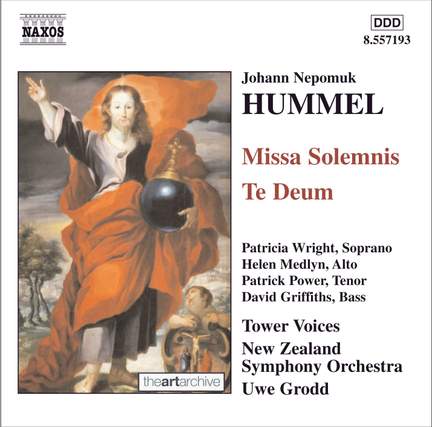
Hummel, J: Missa Solemnis in C major, etc.
Patricia Wright (soprano), Helen Medlyn (alto), Patrick Power (tenor), David Griffiths (bass)
Tower Voices New Zealand, New Zealand Symphony Orchestra, Uwe Grodd
Awards:
-
Gramophone Magazine, May 2004, Editor's Choice

This, the longest of Hummel's five Masses, is another invigorating example, coupled with an electrifying setting of the Te Deum. Both were written in 1806 and feature martial reminders that...
Hummel, J: Missa Solemnis in C major, etc.
Patricia Wright (soprano), Helen Medlyn (alto), Patrick Power (tenor), David Griffiths (bass)
Tower Voices New Zealand, New Zealand Symphony Orchestra, Uwe Grodd
Purchase product
Awards:
-
Gramophone Magazine, May 2004, Editor's Choice
This, the longest of Hummel's five Masses, is another invigorating example, coupled with an electrifying setting of the Te Deum. Both were written in 1806 and feature martial reminders that...
About
Contents and tracklist
- David Griffiths, Zan McKendree-Wright, Patrick Power, Patricia Wright
- TOWER Voices New Zealand, New Zealand Symphony Orchestra
- Uwe Grodd
- David Griffiths, Zan McKendree-Wright, Patrick Power, Patricia Wright
- TOWER Voices New Zealand, New Zealand Symphony Orchestra
- Uwe Grodd
Awards and reviews
-
Gramophone MagazineMay 2004Editor's Choice
 2010
2010
This, the longest of Hummel's five Masses, is another invigorating example, coupled with an electrifying setting of the Te Deum. Both were written in 1806 and feature martial reminders that this was the period of the Napoleonic Wars.
The Te Deum opens with a rousing march, and with one or two relaxed passages for contrast – illustrating this long and varied prayer-text – continues in a single span. It ends with a brisk and triumphant fugato, quite different from the sombre close most often heard in Anglican settings.
It's a delight. Uwe Grodd draws an exhilarating performance from his forces.
The performance of the Mass is equally successful.
The grandeur of the writing is established in the slow introduction to the Kyrie, leading to a brisk main Allegro (following Haydn's lively practice in Kyries) in a rhythmic triple time. The martial flavour of the writing is evident from the Gloria's opening fanfares and continues into the Credo, until a sharp change of key to a warm A major brings a relaxed and lyrical setting of 'Et incarnatus', followed by the clashing discords of the 'Crucifixus'. 'Et resurrexit' restores the military mood. One moment to relish comes after the last of the calls of 'Credo' on 'Et vitam venturi' (track 4, 9'09") with two rising scale passages clearly intended to send you up to Heaven in their exhilaration.
Brodd opts to use his admirable soloists throughout the Benedictus, even though the autograph suggests otherwise. It works very well, with imitative writing for the soloists set against the four-square tread of the orchestra.
With the Agnus Dei Hummel at last writes a meditative movement, slow and hushed, which develops into chromatic writing in a minor key, before the 'Dona nobis pacem', as in Haydn's masses, brings a joyful close. Grodd inspires vigorous playing and singing from his forces, who are freshly and cleanly recorded.