Piano Music by Federico Mompou
Stephen Hough (piano)
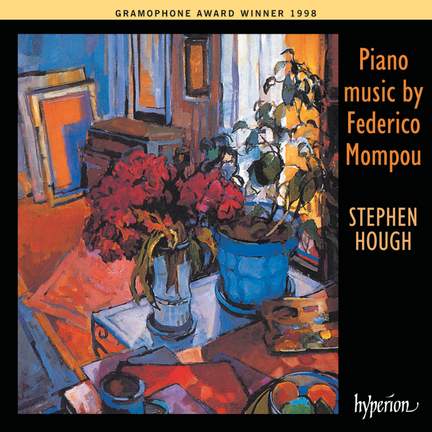
Awards:
-
Gramophone Awards, 1998, Winner - Instrumental

-
Penguin Guide, Rosette

The music of Federico Mompou may appear at first to consist of little more than charming, delicately scented but dilettantish salon near-improvisations with marked overtones of Erik Satie; but...
Piano Music by Federico Mompou
Stephen Hough (piano)
Purchase product
Awards:
-
Gramophone Awards, 1998, Winner - Instrumental
-
Penguin Guide, Rosette
The music of Federico Mompou may appear at first to consist of little more than charming, delicately scented but dilettantish salon near-improvisations with marked overtones of Erik Satie; but...
About
Without a spirit of childhood in the listener, the music of the Catalan Federico Mompou can seem almost infantile. The style the composer himself calls 'primitivista' involves no bar lines, key signatures or other such paraphernalia of 'organized' composition, and at first sight owes much to Satie. However the latter's cynicism here finds expression in genuine innocence and wonder. The titles of the four complete sets recorded here give some impression of what is to be expected: Cants Magics, Charmes but these titles can also be unhelpful, implying order when none is meant; the Cancions y Danzas are not part of a set as such, and the six examples here span some three decades. All of these miniatures (the longest is under six minutes) capture a world that is at once very real (Mompou describes his 'favourite place' as being the 'solitude of all large towns') and yet somehow set at a distance from the mundane through piano writing of plain and unpretentious vision.
Contents and tracklist
Awards and reviews
-
Penguin GuideRosette
 2010
2010
The music of Federico Mompou may appear at first to consist of little more than charming, delicately scented but dilettantish salon near-improvisations with marked overtones of Erik Satie; but it's significant that his earliest works (in the 1920s) are imbued with a sense of mystery and wonder.
Later he was to progress from an ingenuous lyricism (in the Songs and dances) to a profounder contemplation and mysticism, to greater harmonic and keyboard complexity ( Dialogues) and finally, in the 1946-60 Paisajes ('Landscapes'), to a more experimental, less tonal idiom. In the hands of an imaginative pianist like Stephen Hough this other-worldly quality becomes revelatory.
Hough's command of tonal nuance throughout is ultra-sensitive, he catches Mompou's wistful moods to perfection, and on the rare occasions when the music lashes out, as in Prelude No 7, he's scintillating. In the more familiar Songs and dances he's tender in the songs and crisp rhythmically in the dances. He treats the 'Testament d'Amelia' in No 8 with a good deal of flexibility, and because Mompou declared (and demonstrated in his own recordings) that 'it's all so free', he takes the fullest advantage of the marking senza rigore in No 5, which reflects Mompou's lifelong fascination with bell sounds.

In the hands of an imaginative pianist like Stephen Hough this other-worldly, almost eremitic [music] becomes revelatory. He catches Mompou's wistful moods to perfection
 2011 edition
[Hough] is completely inside Mompou's fastidious, Satie-esque sound-world and understands the absorbed influences which make this music as much French as Spanish...Not even Mompou himself equalled, let alone surpassed, Hough in this repertoire.