Special offer. Mondonville - Grands Motets
Les Arts Florissants, William Christie
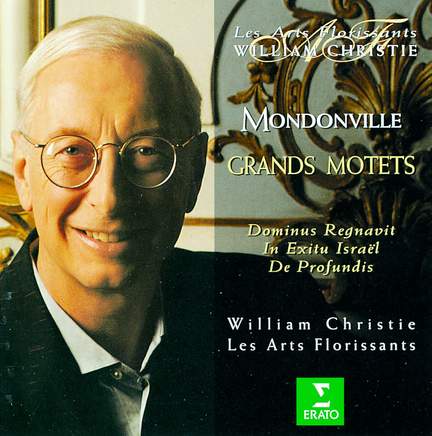
Mondonville's grands motets were enormously popular for many years at the Concert Spirituel in Paris. They follow the pattern laid down by Lalande and continued by Rameau, but with more independent...
Special offer. Mondonville - Grands Motets
Les Arts Florissants, William Christie
Purchase product
Mondonville's grands motets were enormously popular for many years at the Concert Spirituel in Paris. They follow the pattern laid down by Lalande and continued by Rameau, but with more independent...
About
Contents and tracklist
- François Bazola (bass), François Piolino (tenor), Paul Agnew (tenor), Maryseult Wieczorek (soprano), Sophie Daneman (soprano)
- Les Arts Florissants
- William Christie
- Sophie Daneman (soprano), François Bazola (bass), François Piolino (tenor), Maarten Koningsberger (baritone), Maryseult Wieczorek (soprano), Paul Agnew (tenor)
- Les Arts Florissants
- William Christie
- Paul Agnew (tenor), Maarten Koningsberger (baritone)
- Les Arts Florissants
- William Christie
- François Bazola (bass)
- Les Arts Florissants
- William Christie
- Maryseult Wieczorek (soprano)
- Les Arts Florissants
- William Christie
- Maarten Koningsberger (baritone), Paul Agnew (tenor), Maryseult Wieczorek (soprano), Sophie Daneman (soprano)
- Les Arts Florissants
- William Christie
Awards and reviews
 2010
2010
Mondonville's grands motets were enormously popular for many years at the Concert Spirituel in Paris. They follow the pattern laid down by Lalande and continued by Rameau, but with more independent instrumental parts and incorporating Italian influences (e.g. da capo arias) and operatic elements. These three on psalm texts are deeply impressive. Dominus regnavit (1734) was perhaps the earliest of Mondonville's grandsmotets and, besides its polyphonic opening chorus, is notable for two verses entirely for high-register voices and instruments, an operatic tempête, and a stunning complex 'Gloria patri'. De profundis (1748), written for the funeral of a Chapel Royal colleague, is by its nature sombre, and ends not with the usual 'Gloria patri' but with 'Requiem aeternam' and a fugue. The initial chorus was praised to the sky by contemporaries: other highlights are a baritone aria over a free chaconne bass, and a chorus illustrating 'morning' and 'night' by high and low voices respectively. There's even more illustrative music in the 1755 In exitu Israel: what amounts to a dramatic scena, with agitated strings and rushing voices for the 'fleeing sea', dotted figures for the mountains 'skipping like rams', and tremolos and vocal melismas for the 'trembling earth'. The performances are vivid, with very good soloists, an alertly responsive chorus and a neat orchestra.