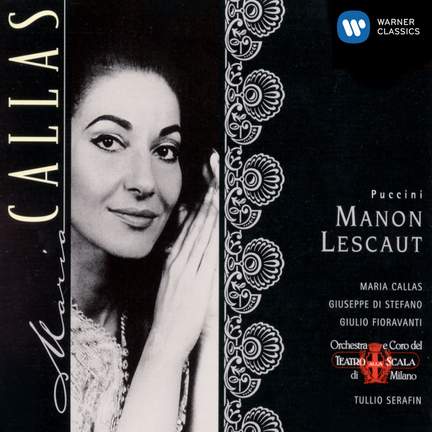
Puccini: Manon Lescaut
Maria Callas, Giuseppe Di Stefano, Giulio Fioraventi, Dino Formachini
La Scala Milan Chorus & Orchestra, Tullio Serafin
Awards:
-
Building a Library, April 2006, First Choice

This performance is unique, with Act 4 for once a culmination in Callas's supreme account of the death scene. She may present a rather formidable portrait of a young girl in Act 1, but here...
Puccini: Manon Lescaut
Maria Callas, Giuseppe Di Stefano, Giulio Fioraventi, Dino Formachini
La Scala Milan Chorus & Orchestra, Tullio Serafin
Purchase product
Awards:
-
Building a Library, April 2006, First Choice
This performance is unique, with Act 4 for once a culmination in Callas's supreme account of the death scene. She may present a rather formidable portrait of a young girl in Act 1, but here...
About
Contents and tracklist
- Vito Tatone (tenor), Giuseppe Morresi (bass), Maria Callas (soprano), Giulio Fioravanti (bass-baritone), Franco Ventriglia (bass), Franco Ricciardi (tenor), Franco Calabrese (bass), Fiorenza Cossotto (mezzo-soprano), Carlo Forti (bass), Dino Formichini (tenor), Giuseppe di Stefano (tenor)
- Teatro alla Scala
- Tullio Serafin
- Recorded: 1957-07-27
- Recording Venue: 18-27 July 1957 / Teatro alla Scala, Milan
- Giulio Fioravanti (bass-baritone), Maria Callas (soprano), Giuseppe di Stefano (tenor), Giuseppe Morresi (bass), Vito Tatone (tenor), Carlo Forti (bass), Dino Formichini (tenor), Fiorenza Cossotto (mezzo-soprano), Franco Calabrese (bass), Franco Ricciardi (tenor), Franco Ventriglia (bass)
- Teatro alla Scala
- Tullio Serafin
- Recorded: 1957-07-27
- Recording Venue: 18-27 July 1957 / Teatro alla Scala, Milan
Puccini:
Manon Lescaut, ATTO SECONDO / ACT 2 / ZWEITER AKT / DEUXIÈME ACTE: Oh, sarò la più bella! (Manon / Des Grieux)
Work length8:24
- Maria Callas (soprano), Giuseppe di Stefano (tenor)
- Teatro alla Scala
- Tullio Serafin
- Recorded: 1957-07-27
- Recording Venue: 18-27 July 1957 / Teatro alla Scala, Milan
- Franco Calabrese (bass), Giuseppe Morresi (bass), Maria Callas (soprano), Vito Tatone (tenor), Giulio Fioravanti (bass-baritone), Franco Ventriglia (bass), Franco Ricciardi (tenor), Fiorenza Cossotto (mezzo-soprano), Dino Formichini (tenor), Carlo Forti (bass), Giuseppe di Stefano (tenor)
- Teatro alla Scala
- Tullio Serafin
- Recorded: 1957-07-27
- Recording Venue: 18-27 July 1957 / Teatro alla Scala, Milan
- Vito Tatone (tenor), Carlo Forti (bass), Maria Callas (soprano), Giuseppe Morresi (bass), Giulio Fioravanti (bass-baritone), Franco Ventriglia (bass), Franco Ricciardi (tenor), Franco Calabrese (bass), Fiorenza Cossotto (mezzo-soprano), Dino Formichini (tenor), Giuseppe di Stefano (tenor)
- Teatro alla Scala
- Tullio Serafin
- Recorded: 1957-07-27
- Recording Venue: 18-27 July 1957 / Teatro alla Scala, Milan
Puccini:
Manon Lescaut (1997 - Remaster), Act IV
Work length15:00
This work is only available as an album download.
- Giuseppe di Stefano, Giuseppe Morresi (bass), Maria Callas (soprano), Vito Tatone (tenor), Giulio Fioravanti (bass-baritone), Dino Formichini (tenor), Carlo Forti (bass), Franco Ventriglia (bass), Fiorenza Cossotto (mezzo-soprano), Franco Calabrese (bass), Franco Ricciardi (tenor)
- Teatro alla Scala
- Tullio Serafin
- Recorded: 1957-07-27
- Recording Venue: 18-27 July 1957 / Teatro alla Scala, Milan
Sola, perduta, abbandonata (Manon / Des Grieux)
Track length5:12
This track is only available as an album download.
Awards and reviews
 2010
2010
This performance is unique, with Act 4 for once a culmination in Callas's supreme account of the death scene. She may present a rather formidable portrait of a young girl in Act 1, but here the final act with its long duet and the big aria, 'Sola, perduta, abbandonata', is far more than an epilogue to the rest, rather a culmination, with Callas at her very peak. Di Stefano, too, is on superb form and Serafin's pacing of the score is masterly. Di Stefano wipes the floor with most of his rivals past and present: in Act 4 he has a concerned tenderness for Manon that others can only sketch, his debonair charm in 'Tra voi belle' is incomparable and (rarest of virtues among tenors) he never sings past the limits of his voice. Fioravanti as Lescaut and Calabrese as Geronte sing well if not very characterfully.
However, digital CD remastering in this instance loses out. A break has to be made in Act 2 – in a fairly innocuous place before the duet 'Tu, tu, amore tu'. The first two acts make up a total timing only a few seconds over the 75-minute limit, but evidently it was enough to prevent them going on to a single CD. That said, the CD brings the same advantages in refining the original boxy sound without glamorising it in false stereo, plus the usual advantages of absence of background and ease of finding places. For an account of ManonLescaut which comes fully to terms with the opera's huge contrasts of colour and mood you'll also have to have a modern recording, for with all its improvements the sound here remains very dry.