Bartok: Viola Concerto
Kim Kashkashian (viola)
Netherlands Radio Chamber Orchestra, Peter Eötvös
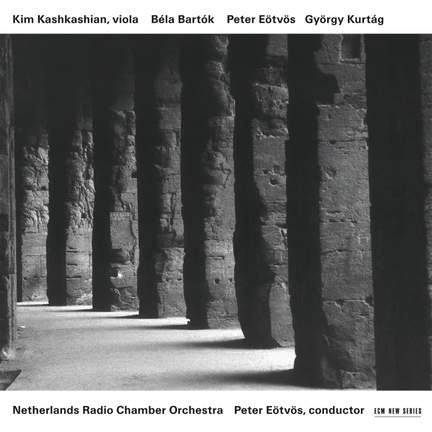
Kashkashian's superbly engineered recording of the Bartók Viola Concerto bears witness to a total identification between performer and composer.
Even the tiny pause bridging the opening and...
Bartok: Viola Concerto
Kim Kashkashian (viola)
Netherlands Radio Chamber Orchestra, Peter Eötvös
Purchase product
Kashkashian's superbly engineered recording of the Bartók Viola Concerto bears witness to a total identification between performer and composer.
Even the tiny pause bridging the opening and...
About
Typically impassioned, committed performances distinguish Kim Kashkashian's New Series recording of music for viola by three great Hungarian composers. Kashkashian's intense focus, superb craftsmanship and explosive virtuosity are brought to bear on Bartk's final work, on one of Kurtg's early pieces, and on 'Replica', an important new composition written especially for her by Peter Etvs.
Kim Kashkashian: viola
Netherlands Radio Chamber Orchestra
Peter Etvs: conductor
Contents and tracklist
- Kim Kashkashian (viola)
- Netherlands Radio Chamber Orchestra
- Peter Eötvös
- Recorded: 1999-06
- Recording Venue: Vredenburg, Utrecht
- Kim Kashkashian (viola)
- Netherlands Radio Chamber Orchestra
- Peter Eötvös
- Recorded: 1999-06
- Recording Venue: Vredenburg, Utrecht
- Kim Kashkashian (viola)
- Netherlands Radio Chamber Orchestra
- Peter Eötvös
- Recorded: 1999-06
- Recording Venue: Vredenburg, Utrecht
Awards and reviews
 2010
2010
Kashkashian's superbly engineered recording of the Bartók Viola Concerto bears witness to a total identification between performer and composer.
Even the tiny pause bridging the opening and the secondary idea growing out of it, is perfectly judged. Kashkashian makes this music dance, not just in the finale but also in the way that she phrases and articulates the entire piece. Eötvös's conducting offers many parallel insights, not least towards the end of the first movement where a growing sense of agitation throws the succeeding Adagio religioso into a particularly favourable light.
Eötvös employs Tibor Serly's completion, revising odd details and accommodating a few articulations and phrasings that Kashkashian has herself instigated. If you need convincing that Bartók's Viola Concerto is a great work, then Kashkashian and Eötvos should, between them, do the trick.
Of the other pieces, Eötvös's Replica for viola and orchestra is astonishing music in which foggy harmonies hover between startled highs and raucous lows, then mutate into a strange, sickly pulsing. By contrast, György Kurtág's early Movement for Viola and Orchestra – twothirds of a concerto Kurtág completed in 1953-4 – is relatively conventional, with plenty of virtuoso viola writing.