Handel: Ariodante
Anne Sofie von Otter (Ariodante), Lynne Dawson (Ginevra), Verónica Cangemi (Dalinda), Ewa Podles (Polinesso), Richard Croft (Lurcanio), Denis Sedov (Il Re di Scozia), Luc Coadou (Odoardo)
Musiciens du Louvre, Marc Minkowski
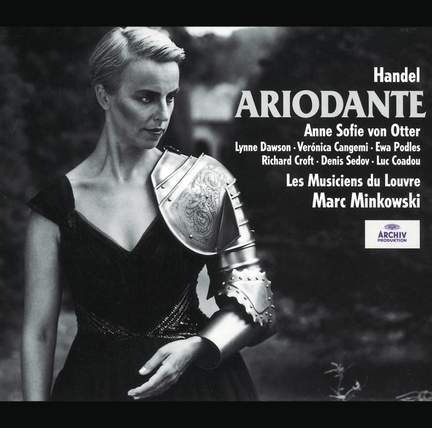
Lynne Dawson is the star of this show. In Act 2, where Ginevra finds herself inexplicably rejected and condemned by everyone, Dawson brings real depth of tone and feeling to her E minor lament,...
Handel: Ariodante
Anne Sofie von Otter (Ariodante), Lynne Dawson (Ginevra), Verónica Cangemi (Dalinda), Ewa Podles (Polinesso), Richard Croft (Lurcanio), Denis Sedov (Il Re di Scozia), Luc Coadou (Odoardo)
Musiciens du Louvre, Marc Minkowski
Purchase product
Lynne Dawson is the star of this show. In Act 2, where Ginevra finds herself inexplicably rejected and condemned by everyone, Dawson brings real depth of tone and feeling to her E minor lament,...
About
Contents and tracklist
- Lynne Dawson (soprano), Veronica Cangemi (soprano), Ewa Podles (mezzo-soprano), Anne Sofie von Otter (mezzo-soprano), Denis Sedov (bass), Luc Coadou (baritone), Richard Croft (tenor)
- Les Musiciens du Louvre, Chorus Of Les Musiciens Du Louvre
- Marc Minkowski
- Recorded: 1997-01
- Recording Venue: Theatre, Salle Molière, Poissy
Spotlight on this release
-
Handel Operas
22nd Aug 2014
Katherine focuses on the hugely prolific composer's stage-works in this week's Favourites.

Awards and reviews
 2010
2010
Lynne Dawson is the star of this show. In Act 2, where Ginevra finds herself inexplicably rejected and condemned by everyone, Dawson brings real depth of tone and feeling to her E minor lament, 'Il mio crudel martoro'; in the final act she shines in the desolate miniature 'Io ti bacio' and brings much fire to the outburst 'Sì, morro'.
But she never transgresses the canons of Baroque style. Von Otter, too, has much marvellous music – the aria 'Scherza infida' is one of Handel's greatest expressions of grief – and she sings it beautifully, but she isn't really at one with his idiom and seems to lack a natural feeling for the amplitude of Handel's lines.
Yet there's much to enjoy here too, the beauty of the actual sound, the immaculate control, the many telling and musicianly touches of phrasing.
But the noble, climactic triumphant aria, 'Dopo notte' doesn't have quite the effect it should. For that, however, Minkowski is partly to blame. Carried away, it almost seems, by the passion of the music, he's often inclined to go at it baldheaded, too fast and with a ferocity of accent that seems foreign to the style and dangerously close to ugly.
Veronica Cangemi makes a charming Dalinda, light, spirited and duly agile, with some gently pathetic expression in the delightful siciliana song early in Act 2. Ewa Podles brings her large, resonant voice to Polinesso's music; and the King of Scotland's fatherly music is done with due fullness and warmth by Denis Sedov, who covers the two-octave range with comfort and resonance.
Despite the driven quality of Minkowski's performance, especially in the high dramatic music of the latter part of the opera, the sheer passion of this set does give it claims to be considered first choice. The admirable McGegan performance is possibly a safer buy, and in some respects it's a more stylish performance, but the singing here, Lynne Dawson's above all, is on balance superior.
 2010
2010
with an outstanding, starry team of soloists, Marc Minkowski conducts a high-powered reading, urgently dramatic and a compelling set in every way.
 August 2014
I had a very hard time alighting on a single favourite for this one: in the final analysis, though, Anne Sofie von Otter's bright-toned, nobly sung hero (dispatching the big bravura numbers at superhuman speed!) and Polish contralto Ewa Podles's splendidly villainous Polinesso tip the balance in favour of Marc Minkowski's 1997 recording.