Boyce: Symphonies Nos. 1-8, Op. 2
The English Concert, Trevor Pinnock
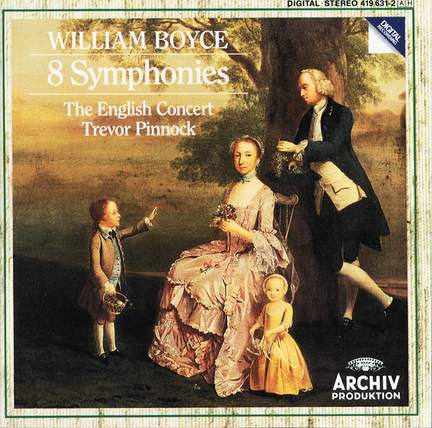
William Boyce's eight Symphonys (his own spelling) aren't symphonies in the modern sense, but a collection, issued for concert use, of overtures he had composed over nearly 20 years for theatre...
Boyce: Symphonies Nos. 1-8, Op. 2
The English Concert, Trevor Pinnock
Purchase product
William Boyce's eight Symphonys (his own spelling) aren't symphonies in the modern sense, but a collection, issued for concert use, of overtures he had composed over nearly 20 years for theatre...
About
Contents and tracklist
- Trevor Pinnock
- The English Concert
- Recorded: 1986-06
- Recording Venue: St. John's, Smith Square
- Trevor Pinnock
- The English Concert
- Recorded: 1986-06
- Recording Venue: St. John's, Smith Square
- Trevor Pinnock (director)
- The English Concert
- Recorded: 1986-06
- Recording Venue: St. John's, Smith Square
- Trevor Pinnock
- The English Concert
- Recorded: 1986-06
- Recording Venue: St. John's, Smith Square
- Trevor Pinnock
- The English Concert
- Recorded: 1986-06
- Recording Venue: St. John's, Smith Square
- Trevor Pinnock
- The English Concert
- Recorded: 1986-06
- Recording Venue: St. John's, Smith Square
- Trevor Pinnock
- The English Concert
- Recorded: 1986-06
- Recording Venue: St. John's, Smith Square
- Trevor Pinnock
- The English Concert
- Recorded: 1986-06
- Recording Venue: St. John's, Smith Square
Awards and reviews
 2010
2010
William Boyce's eight Symphonys (his own spelling) aren't symphonies in the modern sense, but a collection, issued for concert use, of overtures he had composed over nearly 20 years for theatre pieces and court odes. They represent English 18th-century music at its unpretentious best, notably in their formal unorthodoxy. The performances are a delight – cleanly articulated, decisive in rhythm, just in tempo. The French overture-like movements that open Nos 6 and 7 are crisp and brilliant; the more Italianate first movements, like those of Nos 2 and 4, have a splendid swing. And the tone of gentle melancholy behind the fine, expansive D minor first movement of No 8 is particularly well caught. Three of the symphonies have middle movements marked Vivace, which often leads conductors into unsuitably quick tempos; but Pinnock obviously knows that, in 18th-century England, Vivace meant a speed not much above Andante, and for once these movements make proper sense: they're lively, to be sure, but not fast. This disc comfortably surpasses any rivals in both style and accomplishment. The sound of the modestsized band is brightly and truly reproduced.