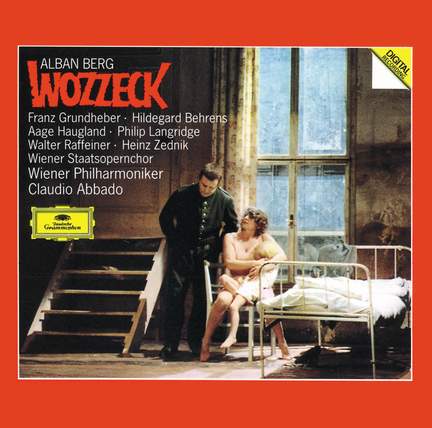
Berg: Wozzeck
Franz Grundheber (Wozzeck), Hildegard Behrens (Marie), Walter Raffeiner (Tambourmajor), Philip Langridge (Andres), Heinz Zednik (Hauptmann), Aage Haugland (Doktor), Anna Gonda (Margret), Peter Jelosits (Narr), Alfred Sramek (1.Handwerkbursch), Alexander Maly (2.Handwerkbursch)
Vienna Boys Choir,...
Awards:
-
Building a Library, January 2015, First Choice

A live recording, in every sense of the word.
The cast is uniformly excellent, with Grundheber good both at the wretched pathos of Wozzeck's predicament and his helpless bitterness, and Behrens...
Berg: Wozzeck
Franz Grundheber (Wozzeck), Hildegard Behrens (Marie), Walter Raffeiner (Tambourmajor), Philip Langridge (Andres), Heinz Zednik (Hauptmann), Aage Haugland (Doktor), Anna Gonda (Margret), Peter Jelosits (Narr), Alfred Sramek (1.Handwerkbursch), Alexander Maly (2.Handwerkbursch)
Vienna Boys Choir,...
Purchase product
Awards:
-
Building a Library, January 2015, First Choice
A live recording, in every sense of the word.
The cast is uniformly excellent, with Grundheber good both at the wretched pathos of Wozzeck's predicament and his helpless bitterness, and Behrens...
About
Contents and tracklist
- Franz Grundheber (baritone), Heinz Zednik (tenor), Philip Langridge (tenor), Hildegard Behrens (soprano), Anna Gonda (alto), Aage Haugland (bass), Walter Raffeiner (tenor), Alfred Sramek (bass), Alexander Maly (baritone), Peter Jelosits (tenor), Helmut Froschauer (chorus master), Werner Kamenik (tenor), Viktoria Lehner (soprano)
- Wiener Philharmoniker, Wiener Staatsoper, Wiener Sängerknaben
- Claudio Abbado
- Recorded: 1987-06-04
- Recording Venue: Staatsoper, Vienna (Wien)
Scene 3: Marie's room. "Tschin Bum, Tschin Bum, Bum, Bum, Bum! Hörst Bub? Da kommen sie!"
Track length8:14
Awards and reviews
 2010
2010
A live recording, in every sense of the word.
The cast is uniformly excellent, with Grundheber good both at the wretched pathos of Wozzeck's predicament and his helpless bitterness, and Behrens as an outstandingly intelligent and involving Marie, even the occasional touch of strain in her voice heightening her characterisation. The Vienna Philharmonic responds superbly to Abbado's ferociously close-to-the-edge direction.
It's a live recording with a bit of a difference, mark you: the perspectives are those of a theatre, not a recording studio. The orchestra is laid out as it would be in an opera-house pit and the movement of singers on stage means that voices are occasionally overwhelmed. The result is effective: the crowded inn-scenes, the arrival and departure of the military band, the sense of characters actually reacting to each other, not to a microphone, makes for a grippingly theatrical experience. This version has a raw urgency, a sense of bitter protest and angry pity that are quite compelling and uncomfortably eloquent.
(Currently not listed on CD; well worth tracking down internationally or downloading.)