Bach - Lutheran Masses Volume 2
Nancy Argenta (soprano), Michael Chance (counter-tenor), Mark Padmore (tenor), Peter Harvey (bass)
Purcell Quartet
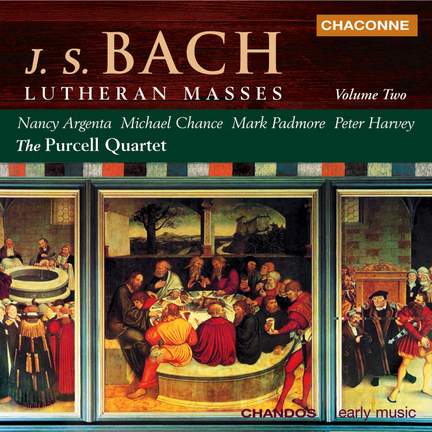
The absurd prejudice that long deprived us of adequate recordings of Bach's four Lutheran Masses (or short Masses, as they're also known because, in accordance with Lutheran usage, they set...
Bach - Lutheran Masses Volume 2
Nancy Argenta (soprano), Michael Chance (counter-tenor), Mark Padmore (tenor), Peter Harvey (bass)
Purcell Quartet
Purchase product
The absurd prejudice that long deprived us of adequate recordings of Bach's four Lutheran Masses (or short Masses, as they're also known because, in accordance with Lutheran usage, they set...
About
Contents and tracklist
- Nancy Argenta, Michael Chance, Mark Padmore, Peter Harvey, Purcell Quartet, Anthony Robson, Catherine Latham, Jane Rogers
- Nancy Argenta, Michael Chance, Mark Padmore, Peter Harvey, Purcell Quartet, Anthony Robson, Catherine Latham, Roger Montgomery
Awards and reviews
 2010
2010
The absurd prejudice that long deprived us of adequate recordings of Bach's four Lutheran Masses (or short Masses, as they're also known because, in accordance with Lutheran usage, they set only the Kyrie and Gloria) seems finally to have died a death. The Masses' crime has been to be made up almost entirely of paraphrases of cantata movements from the 1720s, yet Bach is Bach, whatever the circumstances, and this is wonderful music which, like the B minor Mass, offers sober old-style polyphonic choral movements of impressive cumulative power alongside choruses of almost physical excitement and clamour and some first-rate arias with instrumental obbligato.
As with volume 1, a one-to-a-part approach is taken, with the four vocal soloists also forming the choir and the Purcell Quartet being augmented by whatever extra instruments are needed. The result doesn't sound at all underpowered, and gains considerably over Herreweghe's typically well-turned but more traditional choral approach in vividness of texture and harmony, crispness of attack and a madrigalian litheness of expressive response.
The recording allows just the right amount of bloom without becoming washy. There are times when the two higher voices sound further forward than the others, and Michael Chance occasionally disappears a bit towards the bottom of his range, but in general this release brings nothing but pleasure both in the music and in the stylish and lively performances.