Bax: In Memoriam
Margaret Fingerhut (piano), Jean Rigby (mezzo)
BBC Philharmonic Orchestra, Vernon Handley
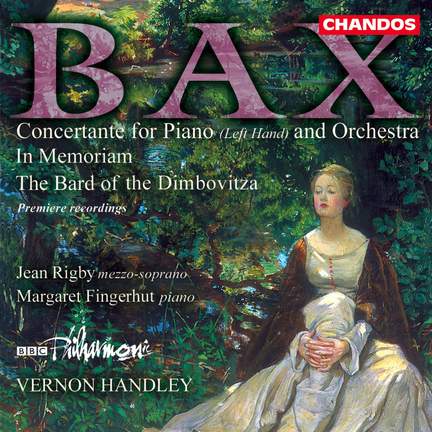
The glorious tune that dominates the 1916 tone-poem In Memoriam will be familiar to many Bax enthusiasts from its use in his 1948 film score for David Lean's Oliver Twist, and to hear it in...
Bax: In Memoriam
Margaret Fingerhut (piano), Jean Rigby (mezzo)
BBC Philharmonic Orchestra, Vernon Handley
Purchase product
The glorious tune that dominates the 1916 tone-poem In Memoriam will be familiar to many Bax enthusiasts from its use in his 1948 film score for David Lean's Oliver Twist, and to hear it in...
About
Contents and tracklist
Awards and reviews
 2010
2010
The glorious tune that dominates the 1916 tone-poem In Memoriam will be familiar to many Bax enthusiasts from its use in his 1948 film score for David Lean's Oliver Twist, and to hear it in its original surroundings is both a moving and thrilling experience.
It had long been assumed that the 32-year-old composer never got round to scoring this deeply felt elegy so it's pleasing to find that Vernon Handley and the BBC Philharmonic do full justice to its opulent yet iridescent sound world, with its strong ech- oes of The Garden of Fand and Nympholept.
The Concertante for left-hand piano and orchestra, written for Harriet Cohen after a domestic accident had disabled her right hand, isn't top-drawer Bax, but remains a most appealing creation, with a central Moderato tranquillo in the composer's sweetest lyrical vein. Margaret Fingerhut is a deft, sympathetic soloist.
The five orchestral songs that make up TheBard of the Dimbovitza, setting poems allegedly based on Romanian folk-songs, contain not a hint of local colour but are purest Bax, the harmonic idiom and overall mood strikingly similar to his Enchanted Summer. Jean Rigby vividly characterises the dialogue in the last two songs ('My girdle I hung on a tree-top tall' and 'Spinning Song'), while bringing plenty of drama to the almost operatic scena that's 'The Well of Tears'. Some typically lustrous Chandos engineering adorns this valuable triptych of recorded premières, and the issue as a whole deserves the heartiest of welcomes.