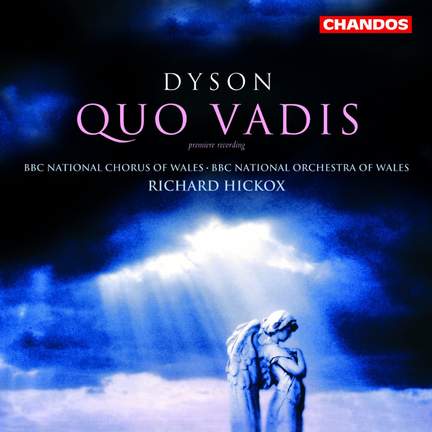
Dyson: Quo Vadis
Cheryl Barker (soprano), Jean Rigby (mezzo-soprano), Philip Langridge (tenor), Roderick Williams (baritone)
BBC National Chorus and Orchestra of Wales, Chamber Choir of the Royal Welsh College of Music and Drama, Richard Hickox
Awards:
-
Gramophone Magazine, June 2003, Editor's Choice

Like so many British composers Dyson, even before he died in 1962, suffered neglect through writing in a conservative idiom that critics were all too ready to label 'out of date'. Originally...
Dyson: Quo Vadis
Cheryl Barker (soprano), Jean Rigby (mezzo-soprano), Philip Langridge (tenor), Roderick Williams (baritone)
BBC National Chorus and Orchestra of Wales, Chamber Choir of the Royal Welsh College of Music and Drama, Richard Hickox
Purchase product
Awards:
-
Gramophone Magazine, June 2003, Editor's Choice
Like so many British composers Dyson, even before he died in 1962, suffered neglect through writing in a conservative idiom that critics were all too ready to label 'out of date'. Originally...
About
Contents and tracklist
- Richard Hickox, BBC National Orchestra of Wales, BBC National Chorus of Wales, Royal Welsh College of Music and Drama Chamber Choir, Jean Rigby, Roderick Williams, Philip Langridge, Steven Burnard, Cheryl Barker
Awards and reviews
-
Gramophone MagazineJune 2003Editor's Choice
 2010
2010
Like so many British composers Dyson, even before he died in 1962, suffered neglect through writing in a conservative idiom that critics were all too ready to label 'out of date'. Originally written for the Three Choirs Festival in Hereford in 1939, its first performance was-cancelled because of the outbreak of war, and it was only given its premiere in Hereford a decade later.
Dyson draws on the widest array of sources, boldly picking out passages from such poets as Campion, Vaughan, Herrick, Shelley, Newman and Bridges in an elaborate kaleidoscope, mixing them together in all but one of the nine substantial movements, even rearranging individual lines from Wordsworth's Intimations ofImmortality. He also includes such well-known hymns as God be in my head and New every morning without hinting at the respective hymn tunes. Such a scheme might be expected to sound disjointed or bitty, but Dyson's response to each section of his text gives a seamless quality to each movement, with ecstatic choral climaxes designed to exploit the all-embracing acoustics of a great cathedral. The warm but well-defined recording helps to heighten the impact of the singing of the Welsh choristers. All four soloists are in superb voice, each of them strong, firm and characterful; and both choruses sing with fresh, incandescent tone. Dyson's idiom may not be as distinctive as that of those other 'agnostics at prayer', but with its lyrical warmth and fine control of texture, the result will delight all devotees of the English choral tradition.