Vaughan Williams in Context
- Editor: Onderdonk, Julian
- Editor: Owen, Ceri
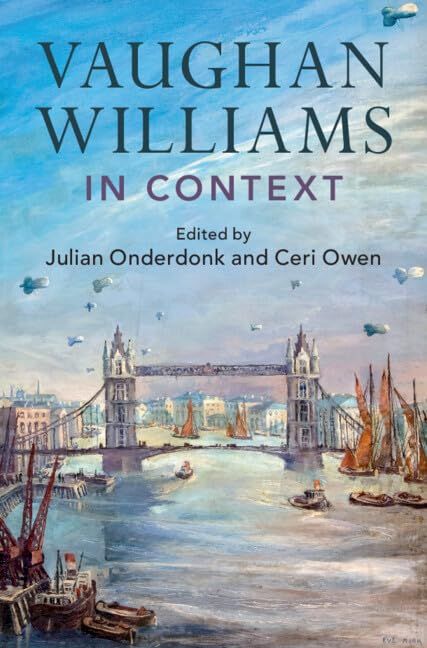
Vaughan Williams in Context
- Editor: Onderdonk, Julian
- Editor: Owen, Ceri
Purchase product
About
Challenging residual doubts about Vaughan Williams's role and significance within twentieth-century music and culture, this book places and explores his life and music in their broad musical, cultural, social, and political contexts. Chapters by scholars from a range of disciplines re-evaluate the composer's life and career within a world marked by both rapid change and refigured traditions. Building on scholarship that has established Vaughan Williams as aesthetically and politically progressive, the book furthers a revisionist perspective by broadening understandings of the nature of his responses to the twentieth century. This portrait of a modern composer emerges not merely by focusing on under-represented interests and pursuits, but also by contextualizing those activities that have been misrepresented as conservative or backward-looking.
Contents
- Introduction Ceri Owen and Julian Onderdonk;
- Part I . Biography, People, Places:
- 1. London and the modern City Alain Frogley;
- 2. Personality David Manning;
- 3. Correspondents Hugh Cobbe;
- 4. Women Erica Siegel;
- 5. Friends outside music Roger Savage;
- 6. Cambridge Karen Arrandale;
- Part II . Inspiration and Expression:
- 7. Early development Jeremy Dibble;
- 8. Romanticism Benedict Taylor;
- 9. Amateur music and musicians Julian Onderdonk;
- 10. Performance Jonathan Clinch;
- 11. Modalities of landscape Daniel M. Grimley;
- Part III . Culture and Society:
- 12. Politics J. P. E. Harper-Scott;
- 13. Liberalism and landscape Sarah Collins;
- 14. The English folk revival Georgina Boyes;
- 15. Christian socialism and the English hymnal Katie Palmer Heathman;
- 16. Pageantry Alexander Hutton and Paul Readman;
- 17. History and the spirit of revivalism Deborah Heckert;
- 18. War Eric Saylor;
- Part IV . Arts:
- 19. Literature Matthew Ingleby and Ceri Owen;
- 20. Visual art Tim Barringer;
- 21. Theatre, 1895–1914 Roger Savage;
- 22. Dance Rishona Zimring;
- 23. Film Peter Franklin;
- Part V . Institutions:
- 24. 'Wanting' the home-grown composer: opportunities and encouragement after the First World War David C. H. Wright;
- 25. Concert life and programming Simon McVeigh;
- 26. The arts council and evolving public policy Andrew Pinnock and Julian Onderdonk;
- 27. The Second World War: a national figure Heather Wiebe;
- 28. Working with the BBC Duncan Hinnells;
- Part VI . Reception:
- 29. Reception outside England, 1901–1914 Allan W. Atlas;
- 30. Interwar continental reception Aidan J. Thomson;
- 31. Early recordings Ryan Ross;
- 32. Reception in the USA: a special relationship Alain Frogley.