Music and Power at the Court of Louis XIII: Sounding the Liturgy in Early Modern France
- Author: Bennett, Peter
Music and Power at the Court of Louis XIII: Sounding the Liturgy in Early Modern France
- Author: Bennett, Peter
Purchase product
About
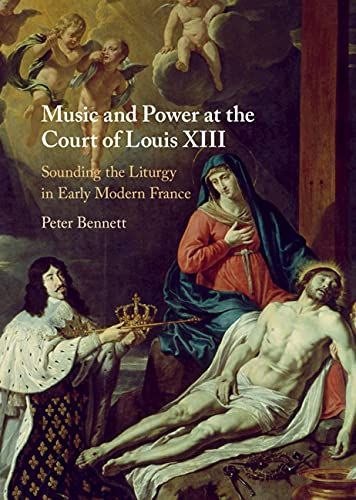
What role did sacred music play in mediating Louis XIII's grip on power in the early seventeenth century? How can a study of music as 'sounding liturgy' contribute to the wider discourse on absolutism and 'the arts' in early modern France? Taking the scholarship of the so-called 'ceremonialists' as a point of departure, Peter Bennett engages with Weber's seminal formulation of power to consider the contexts in which liturgy, music and ceremonial legitimated the power of a king almost continuously engaged in religious conflict. Numerous musical settings show that David, the psalmist, musician, king and agent of the Holy Spirit, provided the most enduring model of kingship; but in the final decade of his life, as Louis dedicated the Kingdom to the Virgin Mary, the model of 'Christ the King' became even more potent – a model reflected in a flowering of musical publication and famous paintings by Vouet and Champaigne.
Contents
- Introduction: music, liturgy and power
- 1. David's harp, Apollo's lyre: psalms, music and kingship in the sixteenth century
- 2. Accession: the coronation, the holy spirit, and the phoenix
- 3. The sword of David and the battle against heresy
- 4. The penitent king
- 5. Pillars of justice and piety: The Entree, the Te Deum, and the Exaudiat te Dominus
- 6. Plainchant and the politics of rhythm: the royal abbey of Montmartre and the royal congregation of the oratory of Jesus Christ
- 7. Succession. The vow of 1638 and Christ the king
- Epilogue and conclusion
- Bibliography
- Index.