Strauss
- Author: Lütteken, Laurenz
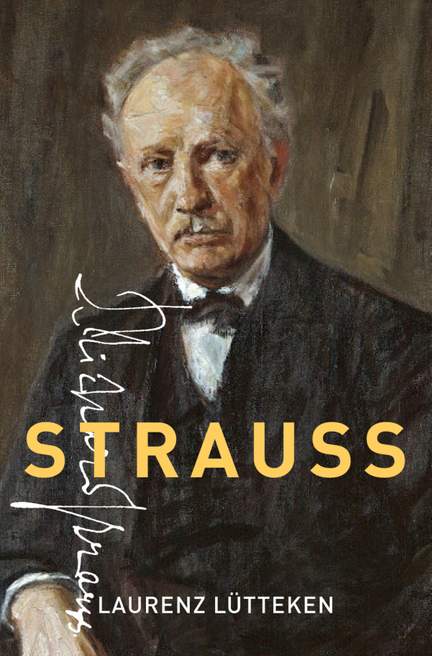
Strauss
- Author: Lütteken, Laurenz
Purchase product
About
Richard Strauss is an outlier in the context of twentieth century music. Some consider him a composer of the late romantic period, while others declare him a traitor of modernity for his role in National Socialism. Despite the controversy surrounding him, Strauss's works - even beyond his most well-known operas Elektra and Rosenkavalier - are present in the repertories of concert halls worldwide and continue to enjoy large audiences.
The details of the composer's life, however, remain shrouded in mystery and gossip. Laurenz Lutteken's Strauss presents a fresh approach to understanding this elusive composer's life and works. Dispensing with stereotypes and sensationalism, it reveals Strauss to be a sensitive intellectual and representative of modernity, with alllight and shade of the turn of the twentieth century.
Contents
- Foreword
- Introduction: Problems
- 1. Images of Strauss
- 2. The Other Modernism
- I. Between Patriciate and Aristocracy
- 1. Munich as a Form of Mental Life
- 2. Family and Milieu
- 3. Education and Readings`
- II. The End of the Nineteenth Century: Leaving Traditional Genres Behind
- 1. Strauss and Tradition
- 2. Inspiration and Compositional Craft
- 3. Against Sonata Form: The End of Symphonic and Chamber Music
- III. The Poetry of Imagination: Lieder
- 1. The Lied as a Form of Musical Thought
- 2. Strauss as Reader and the Poetic Canon
- 3. Border-crossings: Lyric and Chorus
- 4. First and Last Lieder
- IV. Music and Life: The Kapellmeister and His Duties
- 1. Beginnings: Meiningen, Weimar, Munich
- 2. Berlin and Modernism
- 3. Vienna and the Republican Task
- 4. Strauss as Conductor
- V. Poetry of the Real: The Tone Poems
- 1. Distance from Wagner 2. Leaving Behind the Metaphysics of Music 3. Autobiography and New Musical Semantics
- VI. Music Without Metaphysics: The Path to Opera
- 1. Kunstleropern
- 2. The New Theater: Max Reinhardt in Berlin
- 3. Oriental Antiquity and Nervous Counterpoint
- 4. The End of Instrumental Music
- VII. The Social Achieved: Strauss und Hofmannsthal
- 1. Language-crises and Way to the Social
- 2. Silence and Dance
- 3. Plastic Antiquity
- 4. A New Reality: Fairytale and Operetta
- VIII. New Mythology and the Plasticity of Music
- 1. Mozart's Melody and Wagner's Orchestra: Tonality and the New Musical Communicability 2. The Present and Presence of the Theater
- 3. Music as Festival: Salzburg
- IX. Music and Reality
- 1. Life-Worlds: Social Praxis and the Villas in Garmisch and Vienna 2. Copyright and Musical Materiality
- 3. The Reichsmusikkammer
- X. After Hofmannsthal's Death
- 1. Intermezzo with Stefan Zweig
- 2. Joseph Gregor and Final Plans
- XI. Metamorphosen and the End of History
- 1. Final Works
- 2. Self-Interpretations: Metamorphosen
- 3. The New Presence of History?
- Appendices
- A. Biographical Timeline
- B. Catalog of Works
- C. Personalia
- Select Bibliography