Encounters with Conlon Nancarrow
- Author: Hocker, Jürgen
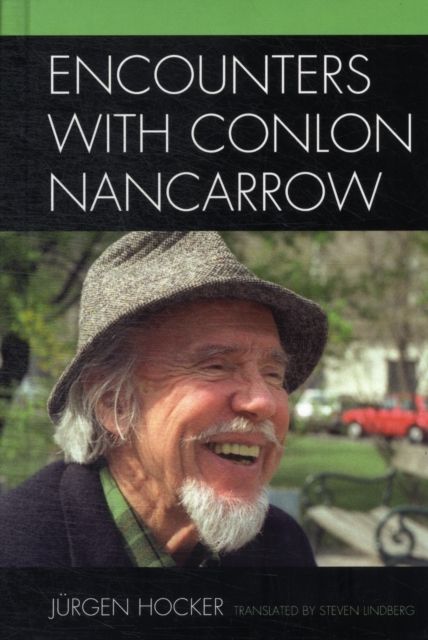
Gyoergy Ligeti called Conlon Nancarrow's music the 'greatest discovery since Webern and Ives'. Jurgen Hocker, a devoted scholar and enabler, bought and restored player pianos in order to realize...
Encounters with Conlon Nancarrow
- Author: Hocker, Jürgen
Purchase product
Gyoergy Ligeti called Conlon Nancarrow's music the 'greatest discovery since Webern and Ives'. Jurgen Hocker, a devoted scholar and enabler, bought and restored player pianos in order to realize...
About
Conlon Nancarrow (1912–1997) was an American-Mexican composer whose works for the player piano exhibit a level of innovation and complexity which remains unmatched even today—his catalogue of works is often considered the Well-Tempered Clavier of the twentieth century. Encounters with Conlon Nancarrow, by Jürgen Hocker, is the first extensive biography of Nancarrow. Hocker gives insight to the life and personality of the often reclusive Nancarrow, making use of many as-yet-unpublished sources and interviews as well as a timeline and a comprehensive catalogue of Nancarrow's works. Encounters with Conlon Nancarrow is an indispensable reference book for musicians, musicologists, and player piano collectors, but it is also sure to appeal to anyone with a particular interest in American contemporary music.
Contents
- Prologue by Gyoergy Ligeti
- Preface and
- Acknowledgments
- Introduction Chapter One: First Concerts. Amsterdam 1987 Chapter Two: Nancarrow in Germany 1988 Chapter Three: Nancarrow in Vienna 1989 Chapter Four: Visits to Mexico Chapter Five: Nancarrow Festival in Paris in 1991 Chronology Catalogue of Works Dissemin
- Bibliography
- Index
Awards and reviews

Gyoergy Ligeti called Conlon Nancarrow's music the 'greatest discovery since Webern and Ives'. Jurgen Hocker, a devoted scholar and enabler, bought and restored player pianos in order to realize Nancarrow's compositions for these instruments. Encounters with Conlon Nancarrow admiringly describes Nancarrow's works, which are marked by jittery, jangly polyrhythms played at superhuman speeds on machines deliberately prepared to sound harsher than the average piano